

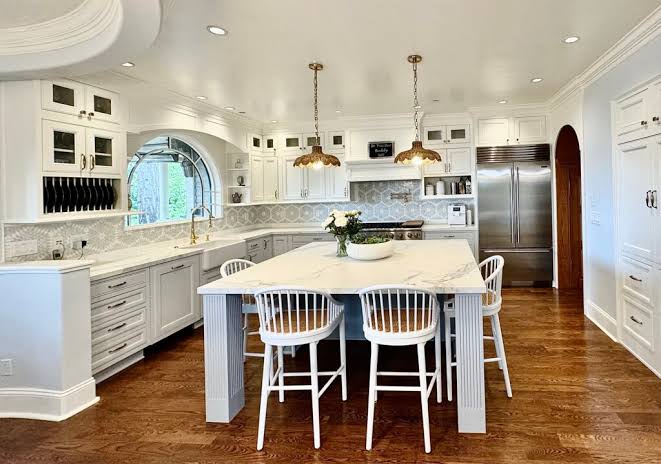
Choosing a countertop is an important part of planning a kitchen because the surface needs to handle daily cooking, cleaning, and entertaining while complementing the overall design. Homeowners in Mercer Island often look for materials that combine durability with a refined appearance. Granite remains a practical option because it offers natural variation, strong surface performance, and a wide range of colors and patterns.
When comparing granite countertops in Mercer Island, WA, it helps to consider more than appearance. Granite is an intrusive igneous rock formed by the slow cooling of magma below the Earth’s surface, giving each slab a distinctive pattern. Its hardness makes it suitable for busy kitchens where countertops may encounter frequent food preparation, spills, and everyday use. Selecting the right slab also requires attention to color, finish, edge profile, and the surrounding cabinets.
Why Granite Works Well in Mercer Island Kitchens
Kitchen countertops must withstand more than occasional use. They are exposed to moisture, heat, food ingredients, sharp utensils, and cleaning products. Properly selected and maintained granite can provide a durable work surface for many years.
Granite also offers design flexibility. Depending on the slab, you can find subtle neutral tones, dramatic veining, or distinctive mineral patterns. This makes it easier to coordinate the countertop with cabinetry, flooring, backsplashes, and hardware.
Another advantage is that every granite slab has natural characteristics that make it different. If you want a kitchen with a surface that does not look mass-produced, natural stone can provide visual depth and individuality.
Granite vs. Quartz, Quartzite, and Marble
Granite is one of several countertop materials worth comparing before making a final selection. Quartz is an engineered surface with consistent patterns and a nonporous composition, while granite offers natural variation from slab to slab. Quartzite is a natural stone that can provide a similar stone appearance with different performance characteristics. Marble is also a natural stone, known for distinctive veining, but it generally requires more care because it can be more susceptible to scratching and etching. Comparing appearance, maintenance requirements, durability, and budget can help determine which material fits the kitchen.
Choosing the Right Granite for Your Kitchen
The best countertop choice depends on how you use your kitchen and the appearance you want to create. Before selecting a slab, consider these practical factors:
- Color: Light granite can create an open appearance, while darker shades can add contrast and definition.
- Pattern: Busy patterns can become a focal point, while subtle designs work well with detailed cabinetry.
- Finish: Polished surfaces provide a reflective appearance, while honed finishes offer a softer, more understated look.
- Edge profile: Straight, eased, or decorative edges can influence the finished style of the countertop. An eased edge provides a simple, slightly softened transition, while a waterfall edge can extend the stone vertically down the side of an island for a more continuous look.
- Slab size: Measure your layout carefully to understand how seams and patterns may appear.
- Thickness: Granite is commonly available in 2 cm and 3 cm thicknesses. The appropriate choice depends on the design, edge treatment, support requirements, and installation details.
- Sink cutout: If you plan to use an undermount sink, the sink opening must be accurately templated and fabricated before installation.
Fabrication, Templating, and Installation Details
Granite installation involves more than selecting a slab. After the kitchen layout is finalized, precise templating helps determine the countertop dimensions, seams, sink cutouts, appliance openings, and edge details. Fabrication then prepares the stone for installation according to those measurements.
Homeowners may also consider remnants for smaller areas, such as bathroom vanities or compact countertop sections. Using an available remnant can provide a practical way to coordinate natural stone without requiring a full slab for a smaller application.
For larger islands, a waterfall edge can create a continuous appearance along the side of the island, while an eased edge provides a simpler profile for standard countertop layouts.
Maintenance Tips for Long-Term Performance
Although granite is durable, regular care helps preserve its appearance. Wipe up spills promptly, especially liquids or foods that may leave stains. Use a cleaner recommended for natural stone rather than harsh products that could affect the surface or protective treatment.
Granite may also require periodic sealing depending on the stone and its level of porosity. An impregnating sealer can help reduce the absorption of liquids into porous stone. Homeowners can perform a simple water test by placing a few drops of water on a clean, dry section of granite and observing whether the stone darkens or absorbs the water relatively quickly. A professional can help determine whether resealing is appropriate based on the stone’s condition and porosity.
Avoid using the countertop as a cutting board, and use trivets when placing very hot cookware on the surface.
Granite Countertop Cost Considerations
Granite countertop pricing varies based on the stone selection, thickness, fabrication, edge profile, cutouts, installation requirements, and project size. As a general planning range, homeowners may encounter installed granite costs of roughly $40 to $100 or more per square foot, although premium slabs and more complex fabrication can increase the total. Requesting an installed estimate is important because the material price alone does not account for templating, fabrication, cutouts, delivery, or installation.
Plan Your Mercer Island Countertop Upgrade
A successful countertop project starts with careful planning. Measure the kitchen, review cabinet and backsplash colors, compare granite slabs in person, and consider how seams and edges will look after installation. Thinking about both design and daily maintenance can help you choose a surface that fits your lifestyle.
Mercer Island homes often feature open kitchen layouts, large islands, long countertop runs, and abundant natural light. These characteristics make full-slab selection especially important because the stone’s movement, color, and veining can change noticeably under different lighting conditions. Coordinating the granite with cabinetry, flooring, and backsplash materials can help create a cohesive remodel.
For homeowners considering granite countertops in Mercer Island, WA, a thoughtful selection process can make the finished kitchen more functional and visually cohesive. Review your space, identify your practical needs, and arrange a professional consultation to discuss suitable stone options and installation requirements.
